How to Prepare a CAD File for Extrusion Manufacturing
* Note: This is just a general best-practices FAQ. Every company requires different specifics, and you should double-check with your extrusion partner before starting a new project.
Custom plastic extrusion allows manufacturers to create specialized profiles, tubing, and components for a wide range of applications. However, successful production begins long before the extrusion process itself. Preparing an accurate CAD file is an important step in ensuring that a custom plastic profile can be manufactured efficiently and meets the intended specifications.
A well-prepared CAD file helps manufacturers understand design requirements, identify potential challenges, and provide more accurate project estimates. Following a few straightforward best practices can make the transition from design to production much smoother.
Start With Accurate Dimensions
One of the most important aspects of preparing a CAD file for plastic extrusion is ensuring that all dimensions are accurate and clearly defined. Even small discrepancies can create challenges during tooling development or production.
Include essential measurements such as overall width, height, wall thickness, and internal dimensions. For hollow profiles or tubing, clearly identify inside and outside diameters where applicable.
Consistent measurements help manufacturers evaluate the design and determine whether adjustments may be necessary.
Keep Profile Geometry Simple When Possible
While custom plastic extrusion can accommodate complex shapes, simpler designs are generally easier and more economical to manufacture. Intricate features, extremely thin walls, and abrupt changes in thickness can make it more difficult to maintain consistent material flow.
When preparing a CAD design, consider whether certain features can be simplified without affecting the component’s intended function. Maintaining relatively uniform wall thicknesses can also improve manufacturing consistency and reduce potential defects.
Clearly Define Tolerances
Tolerances establish how much a finished component’s dimensions can vary from the original design. Specifying appropriate tolerances is essential because plastic extrusion naturally involves some dimensional variation during cooling and production.
Avoid applying extremely tight tolerances to every feature unless they are necessary. Instead, identify critical dimensions that directly affect the component’s fit, function, or assembly.
This approach helps manufacturers focus on the most important specifications while controlling unnecessary production costs.
Include Material Requirements
A CAD file communicates the shape of a component, but manufacturers also need to understand the material requirements. Different thermoplastics have unique characteristics that affect flexibility, strength, chemical resistance, and overall performance.
Provide information about the preferred resin, color, hardness, and any necessary additives. If the material has not been selected, explaining the intended application can help manufacturers recommend suitable options.
Use Common CAD File Formats
Submitting files in widely supported formats makes it easier for manufacturers to review and evaluate a design. Common options include STEP, IGES, DXF, and DWG files, depending on the software and information required.
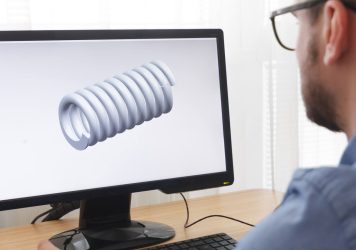
For many extrusion projects, a detailed 2D cross-sectional drawing is particularly useful because it clearly communicates the profile’s geometry. A 3D model can provide additional context for how the finished component will function.
It is also helpful to include a PDF drawing with clearly labeled dimensions and tolerances.
Review Your Design Before Submission
Before sending a CAD file for manufacturing, take time to verify that the information is complete and consistent. Check for missing dimensions, conflicting measurements, and unnecessary design features that could complicate production.
Make sure the latest revision is clearly identified and that all supporting specifications are included. Providing complete documentation reduces back-and-forth communication and helps prevent delays.
Better CAD Files Lead to Better Extrusion Projects
Preparing a CAD file for custom plastic extrusion does not have to be complicated. Accurate dimensions, practical tolerances, clear material specifications, and organized documentation provide a strong foundation for successful manufacturing.
Taking the time to prepare a complete design helps streamline quoting, tooling development, and production. It also improves communication between engineers and manufacturers, reducing the likelihood of costly revisions and helping ensure the finished plastic extrusion meets project expectations.
Custom Extrusion with Inplex
Looking for quality custom extrusion products and services? Inplex is one of the leading custom extrusion services in the US and has almost 60 years of experience. We pride ourselves on our ability to put the right talent and technology in place to perform the best possible job for our clients.
We own a 42,000 sq. ft. facility in Naperville, Illinois, that is temperature-controlled and features an environmentally friendly closed-loop water cooling system. If you have specific needs or questions, don’t hesitate to contact us!
Back to Blog