The Difference Between Rigid and Flexible Extrusions and When to Use Each
Custom plastic extrusion allows manufacturers to create optimized components for a wide range of industries–from automotive and industrial equipment to consumer products and retail fixtures. One of the first major decisions in any extrusion project is whether the profile should be made from a rigid or flexible material.
Each option carries distinct performance characteristics, cost considerations, and application advantages. Understanding the differences helps ensure your part delivers the strength, durability, or adaptability your design requires.
What Are Rigid Extrusions?
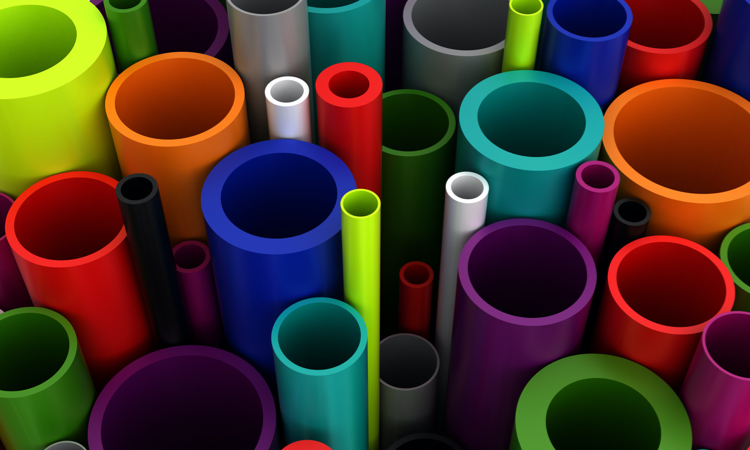
Rigid extrusions are made from polymers that retain a firm structural shape once cooled. Common materials include PVC, ABS, polycarbonate, and certain grades of polyethylene or polypropylene. These materials are engineered to hold tight tolerances, resist deformation, and provide long-term dimensional stability.
Key Characteristics of Rigid Extrusions
- Strong Structural Integrity. Ideal for components that must hold weight or maintain shape under mechanical stress.
- Precision Tolerances. Rigid materials allow for consistent wall thicknesses and sharp geometric details.
- Durability. Excellent resistance to impacts, abrasion, and long-term wear.
- Dimensional Stability. Less prone to expansion or contraction compared to elastomeric materials.
Common Applications
Rigid extrusions are typically used for:
- Protective covers
- Channels and tracks
- Tubes and conduits
- Enclosures and housings
- Mounting components
- Point-of-purchase displays
Any application requiring strength, stability, or consistent fit will generally lean toward a rigid material.
What Are Flexible Extrusions?
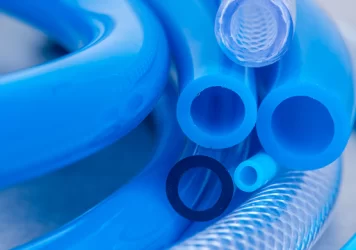
Flexible extrusions use polymers that bend, compress, or stretch without breaking. These include TPE, TPU, flexible PVC, and certain elastomeric blends. These materials are ideal when cushioning, sealing, or movement is required.
Key Characteristics of Flexible Extrusions
- Elasticity: Can bend or flex repeatedly without cracking or fatiguing.
- Compression & Recovery: Ideal for seals or gaskets that must create a pressure fit.
- Soft Touch or Grip: Can provide ergonomic comfort or non-slip surfaces.
- Impact & Vibration Absorption: Often used when shock damping is needed.
Common Applications
- Flexible extrusions are commonly used for:
- Seals and gaskets
- Edge trims
- Protective bumpers
- Grips and handholds
- Flexible tubing
- Wire or cable management components
These profiles are essential when the part must conform to irregular shapes or allow movement.
When to Use Rigid vs. Flexible Extrusions
Choosing between rigid and flexible materials depends on several functional factors:
Use Rigid Extrusions When:
- The part must maintain a defined shape.
- You need tight tolerances or a precise fit.
- Structural strength or load-bearing is required.
- The application involves mounting, fastening, or sliding components.
Use Flexible Extrusions When:
- The part must compress or bend during installation or use.
- You need sealing, cushioning, or vibration dampening.
- The component must adapt to varied or moving surfaces.
- Ergonomics or grip texture is important.
Often, manufacturers choose co-extrusion or tri-extrusion to combine both rigid and flexible materials, allowing a single part to lock into place structurally while adding flexible sections for sealing or comfort.
Custom Extrusion with Inplex
Looking for quality custom extrusion products and services? Inplex is one of the leading custom extrusion services in the US and has almost 60 years of experience. We pride ourselves on our ability to put the right talent and technology in place to perform the best possible job for our clients.
We own a 42,000 sq. ft. facility in Naperville, Illinois, that is temperature-controlled and features an environmentally friendly closed-loop water cooling system. If you have specific needs or questions, don’t hesitate to contact us!
Back to Blog